

 Tyler McFarland on May 1, 2020
Updated on November 8, 2023 Reviewed and fact-checked Found a mistake? Let us know!
Have you ever noticed our human eyesight is perfect at finding colorful fruit? Have you ever thought about how fruit smells so good to us that we make perfumes out of their scent? These observations may lead you to ask if humans are frugivores (animals that prefer a diet of fruit). But everyone says we’re omnivores, right?
Humans today are categorized as omnivores and not frugivores. However, we likely evolved from tree-dwelling frugivores, and the healthiest populations on Earth eat plant-centered diets. The ideal diet for human thriving seems to be mostly plant-based, but it’s unclear if fruit should be the focus.
In this post, I’ll cover this question from three different angles:
- What diet does our anatomy and physiology suggest? Do we have the body of an herbivore, omnivore, frugivore, or what? (Skip to this section.)
- What diet does our evolutionary history suggest? What did our early hominid ancestors eat? And what do our primate cousins eat today? (Skip to this section.)
- What diet leads to the best human health in practice? Are most fruitarians healthy? Which diet has been shown to lead to the best longevity? (Skip to this section.)
But first, let’s cover some terminology!
Omnivore vs Frugivore
There’s no point in writing thousands of words about whether humans are frugivores or omnivores if we’re not clear what we mean by the terms we’re using. So, some definitions:
- Omnivore: An animal that eats plant and animal matter. There are nuances within this category: We can speak of omnivory in behavioral or physiological terms. It’s not just what you do eat but also what your body is capable of deriving energy from. Omnivore also does not imply 50% plants, 50% animals. (Many of our primate relatives are categorized as omnivores but eat around 95% plants.)
- Frugivore: An herbivore or omnivore whose preferred food type is fruit. Frugivores typically consume other food groups, too: Seeds, roots, leaves, and maybe insects or other animal sources of protein. But the biggest single chunk of the diet is fruit. (Chimps are frugivores, eating about 48% fruit.)
Notice this important detail: Many animals that are frugivores are also omnivores, technically. The terms are not actually mutually exclusive. “Omnivore” refers to the scope of the diet, while “frugivore” refers to the emphasis of the diet.
Something else to recognize: There’s a basic, definitional sense in which humans are undeniably omnivores. We’re clearly capable of deriving energy from plants and animals, and across our species, most humans do eat both.
However, that’s not really the point when people debate whether humans are herbivores, omnivores, carnivores, or frugivores. What we’re really asking is this: What is the human body truly adapted to eat? What diet do we most thrive on?
And that will be the focus of this post. Let’s start with what diet our anatomy suggests.
Frugivore Anatomy and Physiology
You may have seen charts or memes that place pictures of human teeth or intestines side-by-side with carnivores, omnivores, and herbivores, making arguments about which category we belong in.
When these images are shared by meat-eaters, they typically emphasize the canine teeth in humans. When posted by vegans or vegetarians, they may emphasize the molars or small mouth opening.
In truth, our anatomy is obviously going to resemble that of other primates the most, since we are most closely related to them. And yes, these primates—chimps, bonobos, etc—are mostly frugivores.
But let’s dig a bit deeper into our human anatomy and the diet it suggests, beyond the superficial details.
Frugivore Digestive System?
The digestive tract is the most obvious part of the body to examine to determine the diet we were made to eat.
Teeth, Jaw, and Mouth
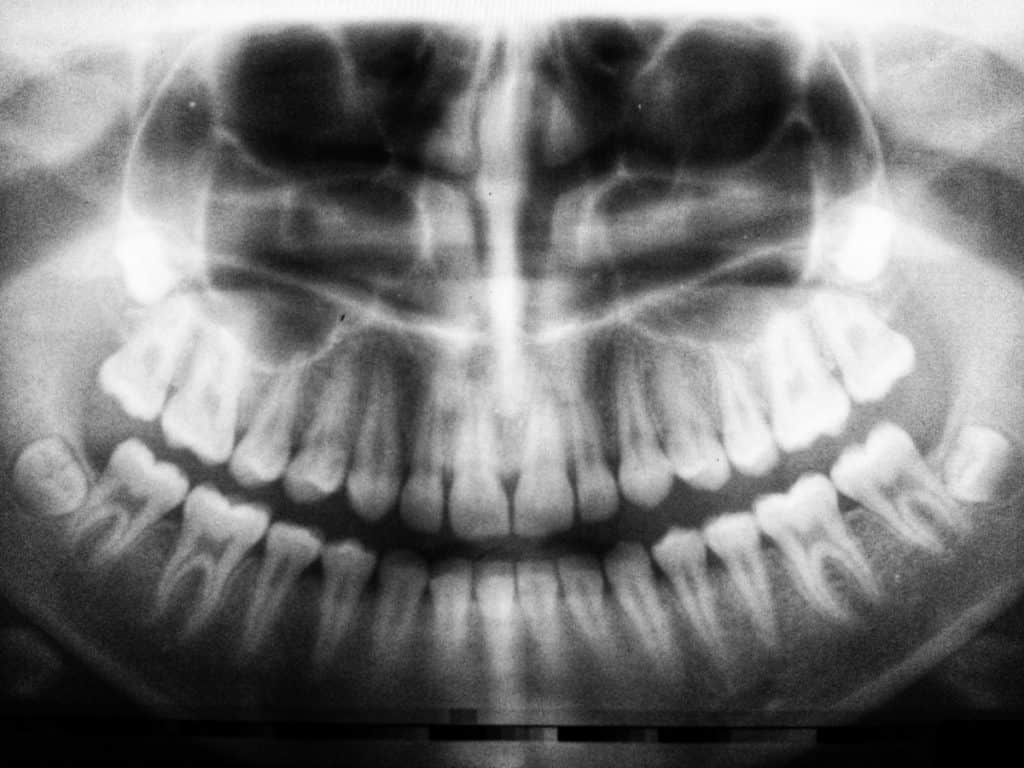
Food enters here first, and there’s already a lot we can observe:
- Teeth: What are human teeth designed to eat? Many people point to our canines as evidence we’re designed to eat meat. But this is a weak argument, as our canines are much smaller than those of true omnivores like dogs. Also, keep in mind: Many herbivores and frugivores (like gorillas and the male musk deer) have big canines despite not eating much (if any) meat. Below I’ll cover more about the fossilized teeth of early humans and what they suggest about their diet.
- Jaw: Our jaw hinges and moves more like an herbivore’s, including side-to-side movement for grinding plant matter, along with a lack of shearing action by having our molars directly on top of one another.
- Tongue: Our tongue lacks the protein receptors and fat receptors that omnivores and carnivores typically have. These receptors make raw, unseasoned meats more appealing to true omnivores. Humans today must cook and season meats with plants and salt to find it appetizing.
- Size of mouth opening: Our small mouth opening (relative to overall head/body size) also puts us in the same category as other herbivores and frugivores. It’s a mouth that simply does not seem to be designed to catch animals or gulp down big hunks of meat.
- Salivary Enzymes: We have ptyalin in our saliva, which is a type of amylase, anenzymeused to digest starches—but omnivores and carnivores don’t have this in their saliva. Interestingly, humans have much more amylase than chimps or bonobos, suggesting we’ve evolved further toward starch digestion since diverging from them evolutionarily. (source)
So far, humans look more like herbivores or frugivores than true omnivores… But let’s continue.
Intestines and Acidity/Alkalinity
Moving inside the abdomen now:
- Intestine length: Human intestines are about 10-12x the length of our trunk, which puts us in line with the herbivores. Omnivore and carnivore intestines are much shorter, typically about 3-6x of trunk length.
- Intestine shape: Our intestines have more pockets, pouches, and ribbing where plant matter will catch, sit, and slowly digest. This is opposed to carnivore and omnivore intestines, which are more smooth.
- Digestion Time: As an effect of the shape and length of our intestines, the time it takes for us to digest food is much shorter than true omnivores or carnivores. Here, too, we fit in with the frugivores and other herbivores.
- Relationship with Fiber: Although we are clearly not ruminant herbivores like cows who actually feed on cellulose, we do require plant fiber to stimulate peristalsis (the churning movement in our GI tract). Carnivores and omnivores do not require fiber in this way.
- pH Levels: The stomachs of carnivores and omnivores are very acidic, around a pH of 1. This helps them to dissolve bone, feathers, claws, and other such features of their prey. Herbivore stomach pH is around 4 or 5—and that’s where we are, too. Our saliva is also more alkaline, like an herbivore, and so is our urine.
- Urine: There’s another key indicator besides the pH levels in our urine, and it’s this: Carnivores and omnivores have very concentrated urine. Meanwhile, human urine concentration tends to be more in the range of herbivore levels, much lower.
Frugivore Anatomy: Beyond the Digestive System
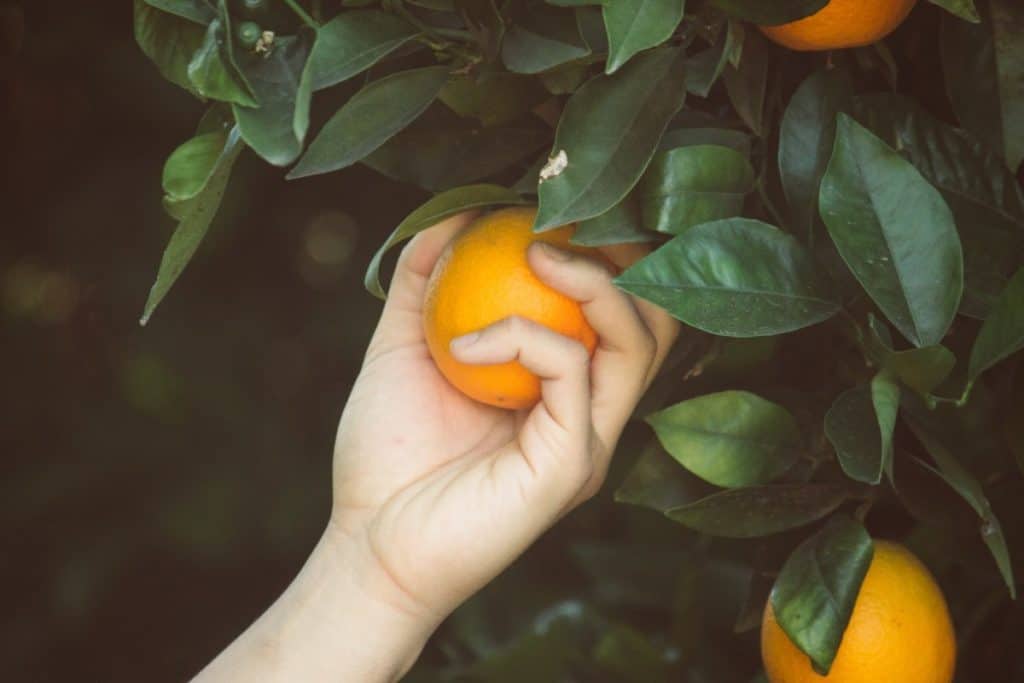
Even on the outside of our bodies, we have several distinct characteristics we can observe as similar to those of other frugivores:
- Eyesight: We have trichromatic vision (blue, yellow, red). Dogs and other meat-eaters typically don’t see color, or not as vividly. And our color vision, shared with other primates, served a purpose evolutionarily—it allowed us to identify fruits and other colorful plant foods.
- Sense of Smell: Humans are attracted to fruity scents, and we often choose fruit scents as perfumes. Dead animals typically smell bad to us—but this may actually reflect an adaptation to scavenging in our past. The fact that decaying corpses smell bad to us may have helped us only choose the fresh corpses when scavenging meat.
- Hands: We don’t have claws to help us catch or cut open prey. Of course, we’ve been able to fashion tools that let us catch, cut, and kill, but these tools aren’t built into our bodies, as they are for omnivores like bears. Some people argue our hands were specifically designed for grabbing fruit—but I don’t know if I’d go that far. Our hands are useful for many things that would’ve been evolutionarily advantageous, not just grabbing fruit specifically.
Frugivore Psychology and Behavior

Beyond our anatomy, how do we think and act in comparison with herbivores, omnivores, and carnivores?
- Repulsion From Killing and Raw Meat: When you see raw, uncooked meat, does it look appetizing to you? And do you like to watch animals die? Most of us would say “no” to these things. In fact, slaughterhouse workers often suffer from PTSD from repeatedly killing animals all day. The fact is that we’re not naturally drawn to killing animals or their uncooked, unflavored corpses in the same way that we’re naturally drawn to the appearance and aroma of fruit.
- How We Drink Water: This one’s kind of strange—but it’s a simple consequence of the mouth shape details noted above. Have you noticed that carnivores typically drink water by lapping it up? And in contrast, we drink water by sipping it up. If you look across many different species, you’ll see a pattern: It’s the herbivores who sip water like we do.
- Amount of Sleep: Carnivores typically sleep most of the day, with short periods of activity for hunting. Herbivores tend to need less sleep. Some herbivores, like horses, only sleep for ~2 hours a day. Our sleep times are a bit lower than most other omnivores, suggesting yet again, more kinship with the herbivores.
So again, it’s no surprise that in most of these measures, we’re most similar to the chimps, bonobos, and other primates, who are frugivores.
But the fact that our anatomy and physiology still look and function mostly like that of an herbivore (or frugivorous omnivore) is still worth noting, independent of our actual history and lineage.
Our species has clearly shown an ability to survive on many different diets throughout history—but, for the most part, it seems we’re still carrying around the bodily equipment of a frugivore.
Side Note: This is the best free video introduction I’ve found on adopting a plant-based diet—the right way. You’ll learn how to lower your risk of cancer, heart disease, type-2 diabetes, Alzheimer’s, and obesity—all with plants. Watch the free Masterclass here.
The History and Evolution of the Human Diet
To get a better picture of our species-specific diet, we can also look at historical and evolutionary evidence.
To do this, let’s first look at the diets of our closest living relatives today, the other primates. Then, let’s look at the evidence for what our early human ancestors ate.
Our Closest Primate Relatives
If we look at chimpanzees and bonobos, with whom we share the most genetic material, they are frugivores, indeed. Bonobos have a diet of 57% fruit, and chimps have a diet of 48% fruit. (source, source)
Orangutans are even more frugivorous, with 61% of their diet coming from fruit, but we are less closely related to them. (source)
It should be noted: These figures still leave plenty of room for other dietary components, too: Leaves, seeds, nuts, honey, termites, buds, and other foods. But fruit is #1.
It’s also interesting to note: Chimpanzees do hunt, but not as a mainstay of their diet—meat is less than 2% of what they eat (source). Meanwhile, bonobos do not hunt, but they will sometimes eat meat opportunistically.
What Did Humans First Eat? Were Early Hominids Frugivores?

If we go back to our Australopithecus ancestors who lived a few million years back, their diets are certainly believed to have been plant-based. But there’s debate about which foods were dominant. (source)
Since many of our ancestors likely lived on the plains of Africa, some may have relied more on grasses, root vegetables, nuts, and seeds compared to tree-dwelling species that came before them. But there’s still evidence of fruit consumption by our bipedal ancestors. (source, source)
In fact, some research does point to a possibility that all species before Homo erectus were frugivores. A famous 1979 NY Times article broke that news from Dr. Alan Walker’s research, which was based on studying hominid teeth with an electron microscope.
There’s a lot more research that’s been done on many of these early human ancestors. Unfortunately, I’m not an expert who can guide you through all of it or settle any disputes. If you’re really trying to go deep with this issue, you’d want to start by looking at these species:
- Australopithecus afarensis (~3 million years ago)
- Homo habilis (the first to make tools, ~2 million years ago)
- Homo erectus (bigger brains, lived until ~100,000 years ago)
- Homo neanderthalensis (lived until ~40,000 years ago)
The Evolution Toward Starch and Meat
So the general picture of our ancestor’s diets seems to be that we likely came from a tree-dwelling frugivore species, as did the other primates—but our diet has also changed a lot based on our environment since then.
Part of what changed was not just our geographical environment but our ability to use tools. With Homo habilis (~2 million years ago), we see the use of stone tools.
Stone tools made it easier to eat meat, as well as starch like hard tubers. Even before the use of fire for cooking, these foods could be prepared by “slicing, pounding, or flaking.” (source)
It’s possible that these changes in our diet were part of what allowed our species to evolve into the animals we are today. Starch and meat are more calorie-dense than fruits or leaves—they likely fueled our nomadic spread across the planet.
Meat-eating in our ancestors likely began with scavenging. But there are now fossil records of early hominids